


Implants vs. Bridges vs. Dentures: Which Is Right for You?
Let’s talk about tooth replacement. You may be here because you’re missing one or more teeth—or you’ve been told that certain teeth need to be extracted due to extensive decay or periodontal disease. The good news is that modern dentistry offers several reliable ways to restore your smile.
The best option for you depends on several factors, including how many teeth are missing, the health of your surrounding teeth and bone, your long-term goals, and your budget. Below, we’ll walk through the most common tooth replacement options and help you understand when each one may be appropriate.
Replacing a Single Missing Tooth
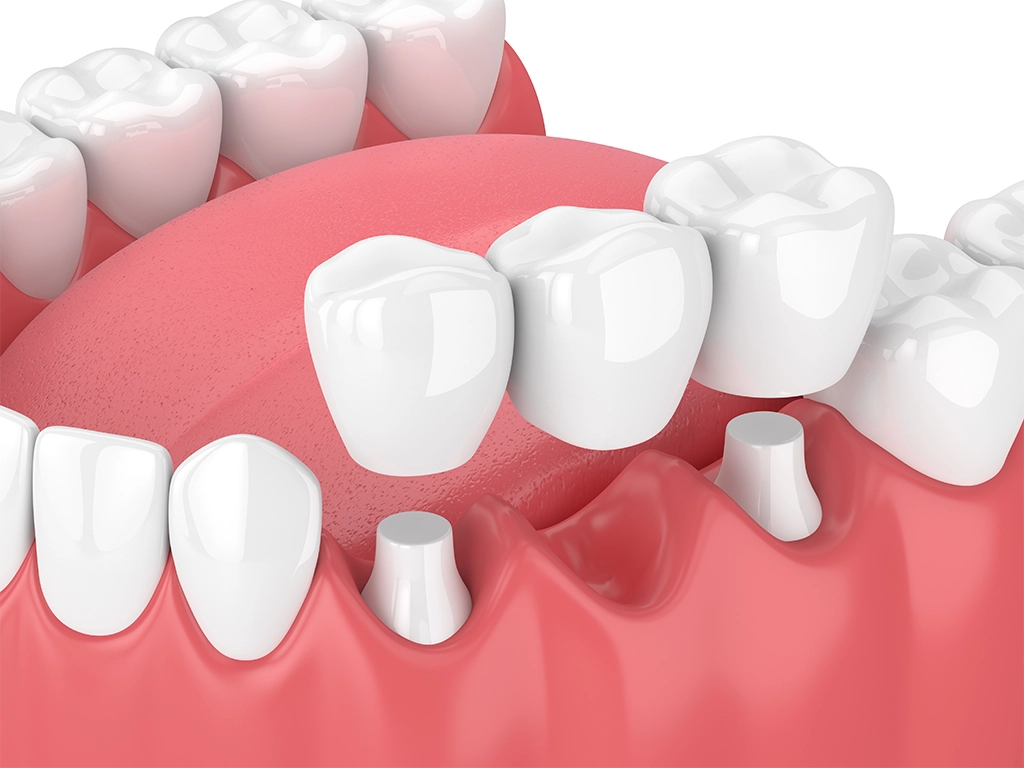
Dental Bridges
If you are missing one tooth—especially a back tooth that you chew with—and you have natural teeth on either side of the space, a dental bridge may be an option.
A dental bridge is typically made of three connected crowns:
- The two outer crowns are cemented onto the adjacent teeth
- The middle crown (called a pontic) replaces the missing tooth
A bridge can be a great solution if the teeth on either side already have large fillings, crowns, or structural damage. In these cases, a bridge allows us to address multiple problem areas with one restoration.
What to expect:
- A preparation appointment where the two adjacent teeth are shaped
- Temporary crowns are worn for a few weeks
- A delivery appointment where Dr. Lavin removes the temporaries, fits the final bridge, checks the bite and flossing spaces, and permanently cements the bridge
Once completed, your smile—and function—can look as though the tooth was never missing.
- Pros of a dental bridge:
Fixed (non-removable) - Can restore chewing function quickly
- Ideal when adjacent teeth already need crowns
Cons of a dental bridge:
- Requires removal of enamel from healthy adjacent teeth
- Requires special flossing techniques (Waterpik and super floss are recommended)
- If hygiene is difficult, decay or failure can occur over time
If the teeth on either side of the missing tooth are healthy, it may be worth preserving that tooth
structure and considering a dental implant instead.
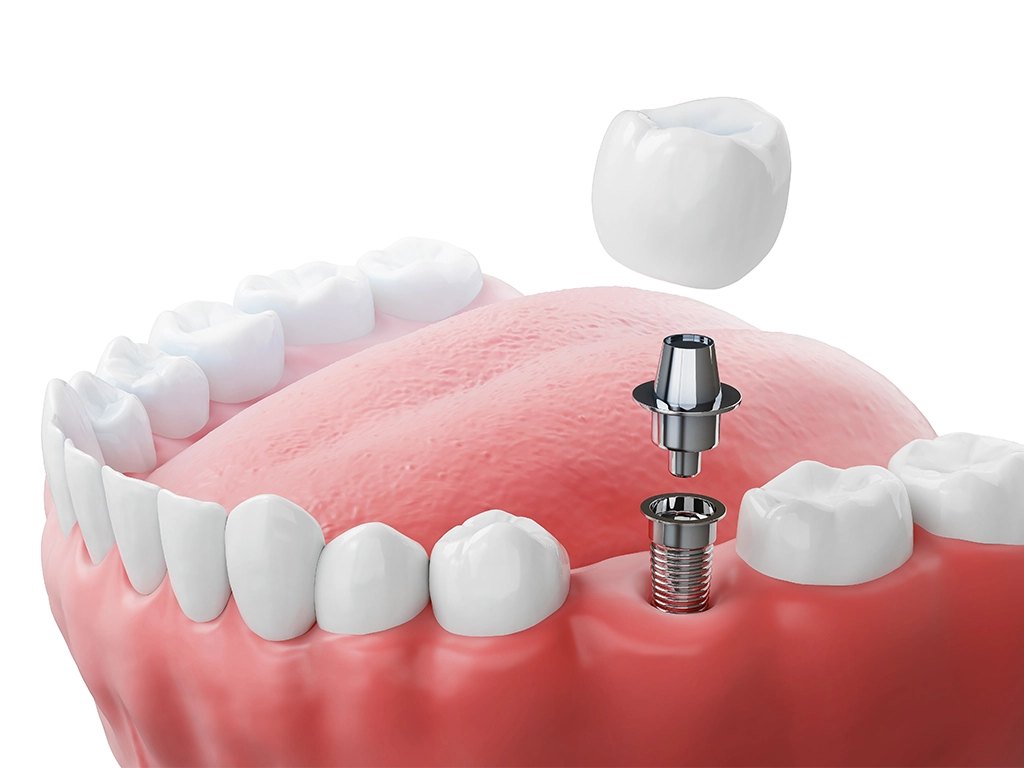
Dental Implants
A dental implant is another excellent option for replacing a single missing tooth. Implants replace the tooth from the root up and do not rely on neighboring teeth for support.
An implant surgeon will first obtain a 3D scan to evaluate bone density and determine ideal implant placement. A titanium implant is then placed into the jawbone and allowed to heal and integrate with the bone—a process called osseointegration, which typically takes 3–4 months. After healing, Dr. Lavin fabricates a custom abutment and crown that attaches to the implant.
Pros of dental implants:
- Mimic the look and function of a natural tooth
- Do not involve adjacent teeth
- Can be flossed normally on both sides
- Fixed and non-removable
- Help preserve bone in the area of the missing tooth
Cons of dental implants:
- Higher initial cost
- Longer treatment timeline
- Require adequate bone volume
- Can fail if not properly maintained (peri-implantitis)
With good oral hygiene and regular dental visits, implants have an excellent long-term success rate.
Replacing Multiple Teeth: Dentures
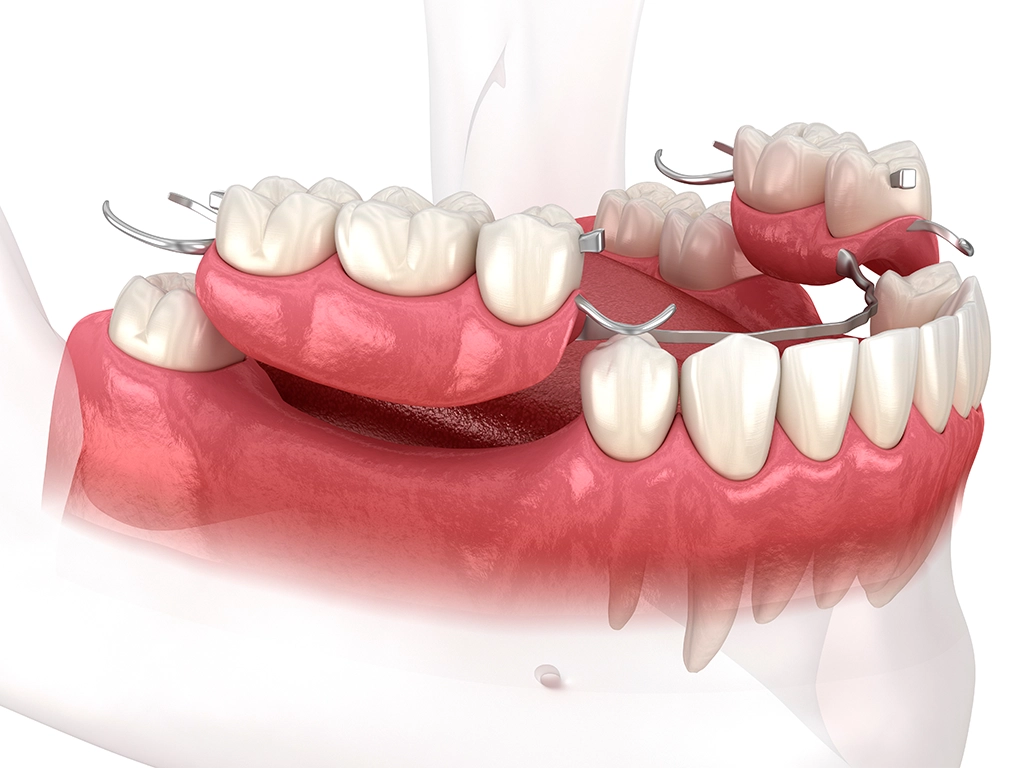
Removable Partial Dentures (RPDs)
Removable partial dentures replace several missing teeth while utilizing the natural teeth you still have. They are held in place by clasps that attach to remaining teeth.
Types of partial dentures:
- Metal RPDs: Strong, adjustable over time, and additional teeth can often be added if needed in the future
- All-acrylic RPDs: No visible metal, more flexible and esthetic in the front of the mouth, but less durable and typically not adjustable or expandable
Partial dentures can be a good solution when implants or bridges are not ideal due to bone,
finances, or tooth distribution.
Removable partial dentures can be a practical solution for many patients, especially when implants or fixed bridges aren’t the right fit.
Advantages:
- Typically, more affordable than implants or fixed bridges
- Do not require surgery
- Can replace several missing teeth at once
- Metal partials can often be adjusted as your mouth changes
- Some designs allow additional teeth to be added later if needed
Things to consider:
- Because they are removable, they may not feel as secure as fixed options
- Metal clasps may be visible depending on tooth position
- They rely on remaining teeth for support, which can place added stress over time
- Must be removed daily for cleaning
- There is usually an adjustment period as your mouth gets used to the appliance

Complete Dentures
Complete dentures are removable appliances that replace all teeth in an upper or lower arch. They rely on the shape of your gums and bone for retention and should be removed nightly.
Because there are no natural teeth to anchor them, the denture fit is critical. Many patients use denture adhesive to improve stability.
Pros of complete dentures:
- More affordable than implant-retained options
- Can restore a smile and basic function in relatively few visits
- Improve facial support and appearance
Cons of complete dentures:
- Do not feel as natural as fixed options
- May reduce taste sensation (especially with upper dentures)
- Require an adjustment period
- Can cause sore spots as tissues heal and change
- Often require relines or remakes over time

Overdentures
Overdentures are removable dentures that snap onto dental implants using attachments such as locators or O-rings. The implants provide retention, so the denture is more secure than a traditional denture.
Pros of overdentures:
- Improved stability compared to traditional dentures
- Still removable for cleaning
- Less bulky and less adhesive needed
- More affordable than fixed full-arch options
Cons of overdentures:
- Still removable
- Attachments wear over time and need replacement
- Require ongoing maintenance

Hybrid Dentures (Fixed Full-Arch Bridges)
Hybrid dentures—often referred to as All-on-4 or All-on-6—are fixed, implant-supported prostheses. These are not removable by the patient and are secured to multiple implants placed strategically in the jaw.
They are typically made from zirconia or acrylic over a titanium framework and are designed to look and function like natural teeth.
Pros of hybrid dentures:
- Fixed and non-removable
- Excellent stability and chewing ability
- No denture adhesive needed
- Do not cover the palate (upper), improving taste and comfort
Cons of hybrid dentures:
- Higher investment
- Longer treatment process
- Require excellent oral hygiene and routine professional maintenance
Which Option Is Right for You?
Every patient is different, and there is no one-size-fits-all solution. At Lavin Family Dental, we take the time to evaluate your oral health, listen to your goals, and help you choose a treatment plan that fits your lifestyle and long-term needs.
If you’re considering tooth replacement, we’d love to help guide you through your options. Schedule a consultation with Dr. Lavin to learn what solution is best for your smile.